
Published April 28, 2026
AI for Restaurants: Reducing Missed Calls and Increasing Table Bookings with Voice Bots

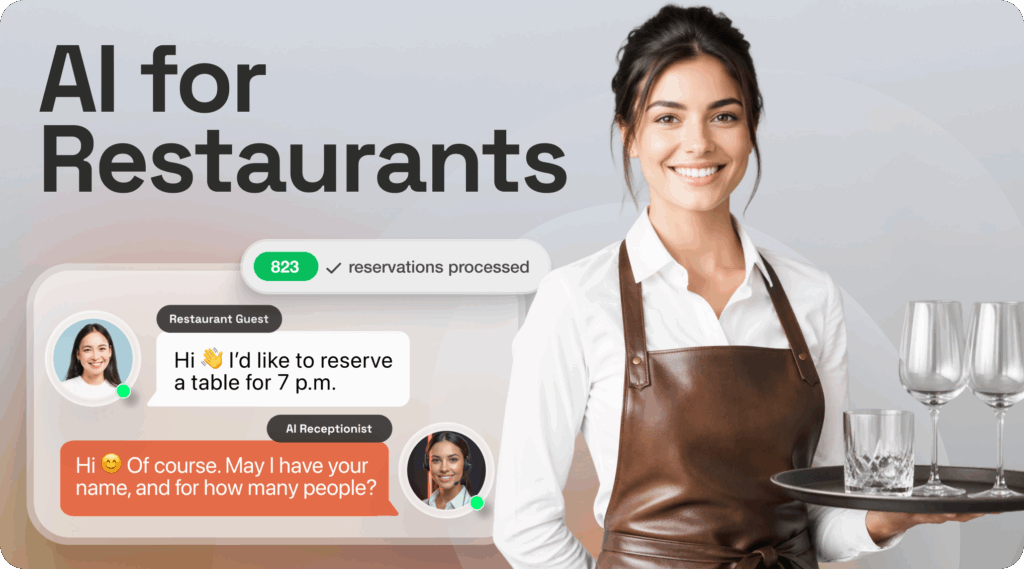
AI for restaurants is transforming how businesses handle guest communication – especially during peak hours when missed calls turn into lost revenue.
Most restaurants don’t ignore calls intentionally. In reality, calls and messages are handled by administrators, hosts, or managers. But the real challenge appears when demand spikes. During peak hours, weekends, or busy service periods, the volume of incoming calls and messages quickly exceeds what one person can realistically manage.
And that’s when missed opportunities begin.
Why Restaurants Struggle with High Communication Volume
Restaurants today manage guest communication across multiple channels – including phone calls, WhatsApp, social media, and email.
Even with a dedicated person handling communication, there is a natural limitation. One person can only respond to one guest at a time. When several inquiries come in simultaneously, delays are inevitable.
Calls go unanswered, messages remain pending, and guests move on to the next available option.
This is not just a staffing issue – it’s a restaurant communication scalability problem.
Why Missed Calls Directly Impact Revenue
Incoming calls are high-intent booking opportunities. Guests are not browsing casually – they are ready to book, order, or make a decision.
If guests don’t get an immediate response, they rarely wait – they book with another restaurant.
Over time, this leads to lost reservations, lower table occupancy, and inconsistent guest experiences. It also creates unnecessary pressure on staff trying to balance service with incoming communication.
Voice AI for Restaurants: How It Works
AI chatbots for restaurants are solving this challenge by automating incoming calls and reservations. Every guest gets an instant response, regardless of how busy the restaurant is.
Modern restaurant voice bots can understand natural speech and respond in real time, answer common questions, and guide guests through actions like booking a table or placing a takeaway order. Solutions like Triviat act as a full AI communication layer for restaurants, handling reservations, modifying bookings, and managing takeaway orders in real time.
This removes the communication bottleneck while keeping staff focused on in-person service.
From Missed Calls to Confirmed Bookings
When restaurants respond instantly, booking conversion rates increase significantly – especially during peak hours when most calls are typically missed.
Instead of missed calls and delayed responses, guests can immediately check availability, secure a table, or request information. AI systems can offer available time slots, confirm reservations, and ensure that every inquiry turns into a potential booking opportunity.
They can also handle more complex scenarios, such as group bookings or event requests, capturing opportunities that might otherwise be missed during busy periods.
The result is simple: more bookings, higher table occupancy, and increased revenue.
Restaurant Automation AI: Managing Orders, Messages, and More
Restaurant communication goes beyond phone calls – guests expect fast responses across all channels. Questions about menus, dietary requirements, or opening hours come in constantly. At the same time, takeaway and pickup orders continue to grow as a major revenue stream.
AI-powered restaurant automation systems and chatbots can handle all guest communication simultaneously.
Multichannel solutions like Triviat extend beyond voice, managing conversations across chat, email, and messaging platforms. They can take or adjust to-go orders, respond to guest inquiries instantly, and ensure that communication stays consistent across every channel.
This creates a unified experience where guests receive the same level of service, no matter how they reach out.
Staying Connected Before and After the Visit
Restaurant communication doesn’t end after a reservation is made.
Restaurants that stay connected with guests before and after their visit often see higher retention and stronger relationships. This is another area where AI adds value.
AI systems can automatically send reservation confirmations and reminders, reducing no-shows. After the visit, they can follow up with thank-you messages or feedback requests via SMS, email, or WhatsApp.
More advanced setups, such as those enabled by platforms like Triviat, can even trigger win-back campaigns, re-engaging guests who haven’t visited in a while and encouraging repeat bookings.
This turns communication into an ongoing relationship, not just a one-time interaction.
Reducing Pressure on Staff Without Sacrificing Service
AI does not replace hospitality. It enables it.
By handling repetitive and high-volume interactions, AI allows administrators and managers to focus on the restaurant floor instead of constantly switching between calls and messages.
Staff are no longer forced to choose between answering the phone and serving guests. Meanwhile, AI ensures that every incoming inquiry is handled instantly in the background.
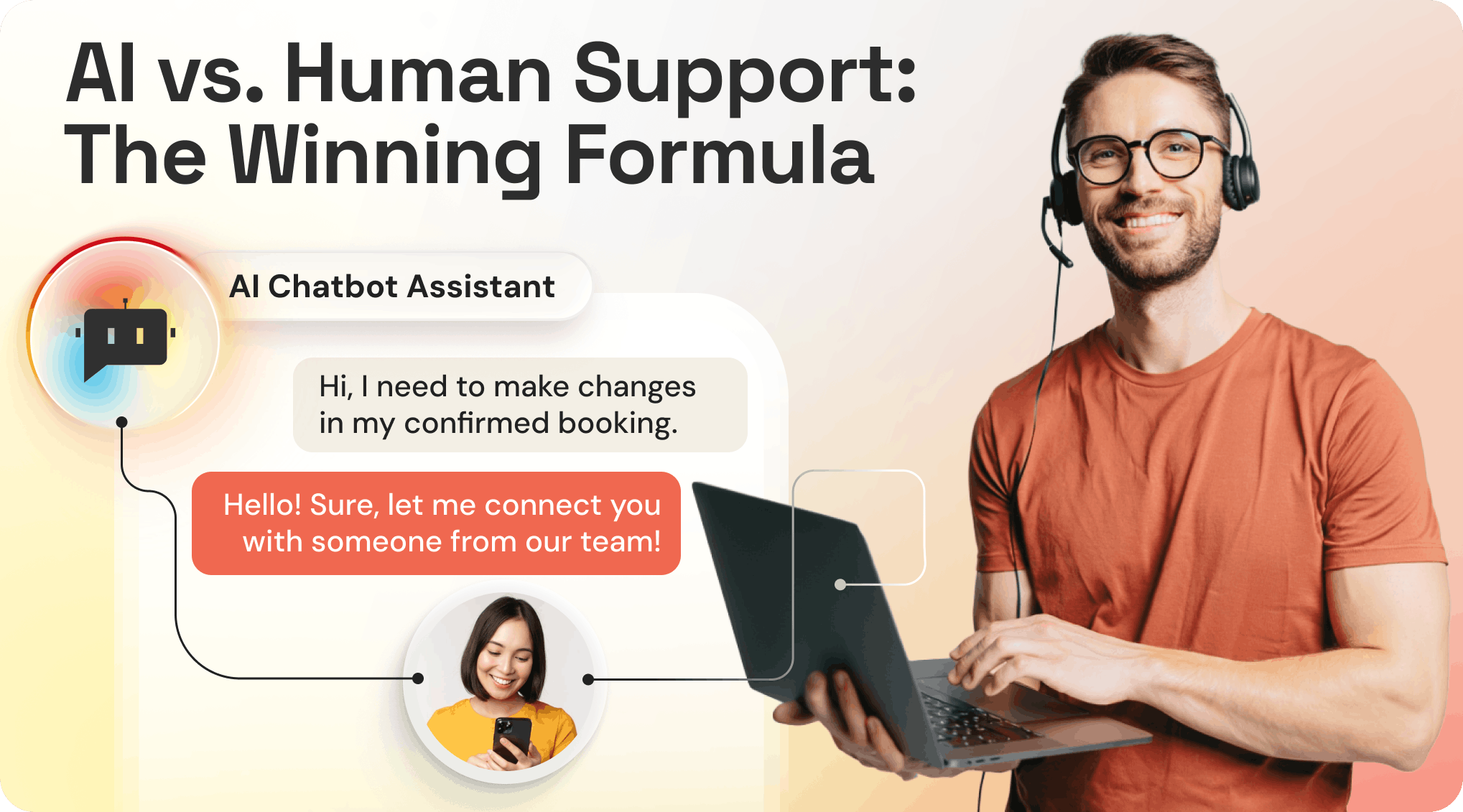
And when a situation requires human involvement, conversations can be seamlessly handed over, ensuring that service remains personal and attentive where it matters most.
The Competitive Advantage of AI in Restaurants
Customer expectations in the restaurant industry have changed, as highlighted in recent AI industry trends.
Guests expect fast responses, easy booking processes, and availability across multiple channels. Restaurants that cannot meet these expectations risk losing demand to competitors who can.
AI voice bots and chatbots provide a scalable way for restaurants to meet these expectations without increasing staffing costs or operational complexity.
They transform communication from a limitation into a competitive advantage.
Looking Ahead
The restaurant industry is moving toward a hybrid model where AI and humans work together.
AI handles volume, speed, and availability. Humans provide judgment, warmth, and personal connection.
This combination allows restaurants to operate more efficiently while maintaining the quality of experience guests expect.
Conclusion: Turn Every Call into Revenue
Missed calls in restaurants are not just operational gaps – they are lost revenue opportunities.
When communication is limited by how many conversations one person can handle, growth is naturally capped.
With AI-powered voice and chat solutions for restaurants, this limitation disappears.
Restaurants can ensure that every call is answered, every order is captured, and every guest interaction is handled instantly and consistently.
And with Triviat AI agents’ solution quietly powering these interactions in the background, restaurants can scale their communication without losing the human touch that defines great hospitality!